
Hypoventilation
Listen to the Lesson Topic
Playing the audio in full is required to complete this topic.
During or after listening, read below to review with visuals.
Read Topic with Visuals
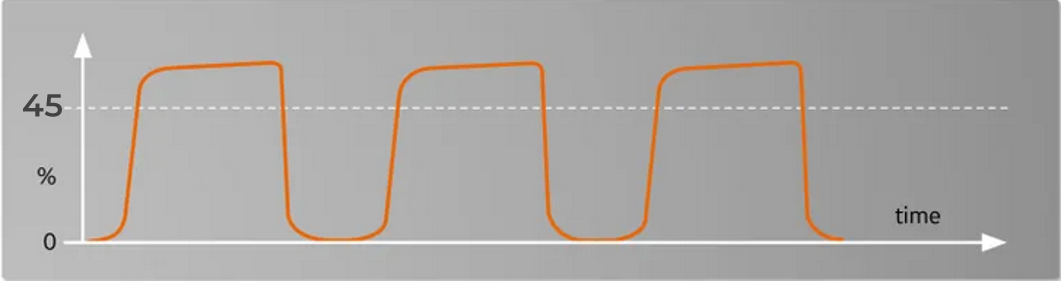
Hypoventilation causes EtCO₂ levels to rise above 45 mmHg—a condition known as hypercapnia. This happens when CO₂ is not expelled fast enough. As shown in Figure 1, hypercapnia presents with a rising EtCO₂ reading.
Figure 1. Hypercapnia > 45 mmHg
Causes of Hypoventilation
In spontaneous (non-vented) patients, common causes include
- respiratory depression (e.g., narcotic overdose),
- muscle fatigue or weakness,
- airway obstruction, and
- chest wall restriction (e.g. pneumothorax, hemothorax).
In mechanically ventilated patients, causes include
- ventilator mismanagement,
- airway obstruction or circuit issues,
- rebreathing, and
- intentional permissive hypercapnia (e.g., in ARDS)
Ventilatory failure is a form of hypoventilation where CO₂ builds up because the lungs can’t remove it fast enough. If untreated, it may lead to respiratory acidosis and tissue hypoxia.
Carbon dioxide retention in COPD is a classic example of chronic hypoventilation (AHA, 2020). In end-stage COPD, the brain may rely on hypoxic drive instead of CO₂ levels to trigger breathing. Giving too much oxygen can suppress this drive, causing CO₂ to rise. Monitoring EtCO₂ before and after oxygen helps guide safe treatment.
Acidosis is a serious consequence of hypoventilation. When CO₂ builds up, respiratory acidosis occurs. This reduces the blood’s ability to carry and deliver oxygen, impairing cellular function.
Mark the lesson complete before continuing.